
Florence Previous Residents by Era
An address history has two tracks. Deeds identify title holders, while directories and census schedules can identify past residents who occupied the place. Maps hold the street and building steady when names change. Florence sources span the present parcel map, a long city-directory shelf, released federal censuses, and two verified Sanborn atlas years. Online land-index coverage has no reliable published start year, so the courthouse remains part of the process from the outset.
| Address-history source | Verified time span | Custodian or repository | Evidence it adds |
|---|---|---|---|
| Current appraisal and GIS | Current; depth unstated | Revenue Commissioner and Florence GIS | Owner, situs, mailing address, parcel and values |
| Recorded land instruments | Online cutoff not published | Lauderdale County Probate Judge | Grantor, grantee, legal description, recording reference |
| Florence city directories | 1900-2010, with gaps | FLPL Local History | Listed occupants, spouse, occupation, address |
| Telephone books | 1929-30; 1948; 1951-2010 | FLPL Local History | Subscriber, address, telephone |
| Federal census | Person-level schedules through 1950 | NARA and library databases | Household members, relationships, tenure |
| Sanborn fire-insurance maps | 1889 and 1921 verified | Library of Congress | Building shape, use, number, street and block context |
| Guardian and administrator files | 1863-1940 | FamilySearch catalog and Probate originals | Estates, fiduciaries, minors and heirs |
For recent decades, start with the parcel and deed. For an early twentieth-century question, pair the nearest directory with the census and map. A title holder and an occupant may be different people, so neither track should replace the other.
Anchor a Florence Address First
The Florence Online Mapping Portal is the best starting point for a modern address. Enter the address, turn on Lauderdale County Land Records, and select the parcel. Save the TMS, map, block, parcel, owner name, physical address, owner mailing fields, acreage, and links to property history or a property card. The parcel boundary provides a stable shape for later comparison.
Keep the situs and mailing address apart. Situs means the physical site. Mailing fields show where assessment mail goes. A mismatch may reflect an estate, company, agent, or a different mailing address. Even a match does not prove that the owner was at the site on the day of the search. The assessor roll is evidence of ownership status, not a full list of previous residents.
Note: Alabama assessment status follows the owner on October 1, so a post-sale tax notice may still carry the earlier name.
Reverse Lauderdale's Deed Chain
The Lauderdale County Probate portal provides public routes to land and probate records, but a durable deed search uses names and legal descriptions rather than the street address alone. Begin with the current owner as grantee, the person or entity receiving title. The recorded deed should name the grantor, the party conveying title. Search that grantor as an earlier grantee, and repeat.
- Copy the current owner, TMS, and legal description from the parcel record.
- Find the owner's acquisition deed and confirm the same land by lot, block, plat, or metes-and-bounds text.
- Record the grantor, grantee, instrument number or book and page, document type, and recording date.
- Search the grantor in the grantee role during an earlier span, then verify the land description again.
- At the online boundary, continue through courthouse grantor-grantee books, deed books, or staff terminals.
- Grantor and grantee
- The grantor gives an interest in land; the grantee receives it.
- Chain of title
- The linked sequence of transfers for the same land parcel.
- Legal description
- The recorded description that identifies the land even when its mailing address or street name changes.
- Instrument reference
- A document number or book-and-page citation used to retrieve the recorded item.
Florence Previous Residents Offline
No accessible official source states the deed index's first online year, full image access, or certified-copy charge. Do not guess a cutoff. The in-person fallback is Judge of Probate Sara N. Holmes at 200 S. Court Street, with the mailing address PO Box 1059, Florence, AL 35631-1059, and phone 256-760-5804. Bring a party name, date span, instrument or book-page reference when known, and the parcel's legal description.
When a visit is not practical, make a narrow written request to the actual custodian. State the instrument type, parties, approximate date, property description, and whether an uncertified scan or certified paper copy is needed. The Florence forms hub lists the city's records-request route for municipal materials such as permit history, while county deeds remain with Probate.
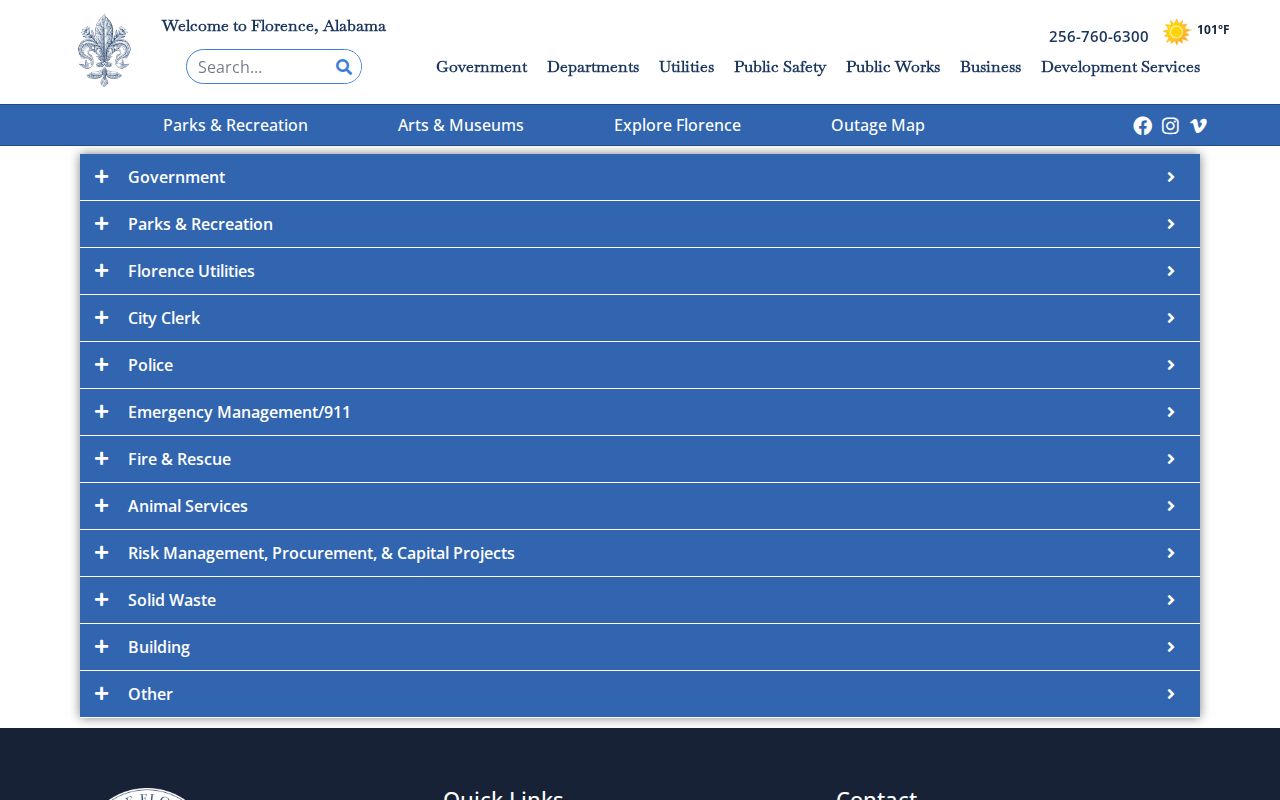
The captured forms page shows why custody must be matched to the record. A city request can seek municipal files, but it cannot replace a county deed search.
Map Florence Address History
The 1921 Florence Sanborn atlas has 41 sheets. The verified 1889 atlas has six. These fire-insurance maps show street and house numbers, block layout, structure shape, materials, and use. They do not name the people inside. Pair the map with a directory from the closest year, then use the deed to verify the parcel.
The growth from six sheets to 41 is useful evidence in itself. A later street or subdivision may fall outside the early atlas because Florence had grown, not because the address was searched poorly. Compare intersections, block form, and lot position before rejecting a match. Modern GIS boundaries can then anchor the old map shape to the current parcel.
Market Street Becomes Wood Avenue
Wood Avenue was formerly Market Street. This verified Florence name change can split one address across catalogs and indexes even when the site did not move. No official citywide renumbering year was found, so avoid claiming that every Florence address changed at one set date. Search both street names and rely on cross streets, plat lot and block, Sanborn geometry, and the legal description.
The rule is simple: names and house numbers are search aids; land descriptions and mapped position are identity evidence. If an old directory says Market Street, save the nearest intersections and house order. Then compare that pattern with the Sanborn sheet and current Wood Avenue map. This bridge is often more reliable than forcing an old number into a modern search box.
Florence Past Residents Between Censuses
Owners are only half the story. FLPL's Florence directory shelf includes editions from 1900 through 2010 with stated gaps, while telephone books cover 1929-30, 1948, and 1951-2010. These sources can place a listed person at an address between federal census years. The full publisher and shelf chronology appears on the Florence city directory page.
Use a short process for each address: directory year to name, name to alphabetic entry, entry to spouse or occupation, then census schedule to household. Start with the street or reverse section when a volume has one. Move to the alphabetic entry for more clues. Compare the nearest released census, including the public 1950 schedules, but do not merge people on surname alone.
A missing line has several causes. The household may have moved, the name may have changed, the person may have died, or the canvass may have missed the address. Publication gaps and unlisted telephone service create more silence. Past residents should be accepted only after at least two sources point to the same person and place.
Close a Florence Resident Trail
A deed chain can pass through an estate rather than a routine sale. If the grantor is an estate, switch to the Probate case route, obituary indexes, and death records. Estate papers and distribution deeds can name heirs or fiduciaries. Guardian and administrator records for Lauderdale County cover 1863-1940 in a FamilySearch catalog filmed from courthouse originals. They are not substitutes for the land books, but they may explain a transfer.
FLPL indexes Florence Times obituaries from 1890-1947, TimesDaily periods in the 1980s and 1990s, Florence Herald periods, and death announcements from 1988-98. A current death certificate is restricted for 25 years under Alabama rules, while an older certificate has broader access. Use an obituary as a family clue and the recorded deed as the title event.
Lawful use. Research Florence previous residents for house history, genealogy, and personal knowledge. Never use a public address trail to follow, threaten, or harass a living person.
Florence Permit History Needs Requests
The city permit login is an account-gated application system, not a public history index by address. For old work, dates, or named applicants, submit a focused request to the Florence Building Department. The office is at 110 W. College Street, Suite 216, with phone 256-760-6325 and weekday hours from 8 a.m. to 5 p.m. Research did not establish the permit archive's first year, so no broad coverage claim is safe.
A permit can date construction or alteration and may identify an owner or contractor tied to the project. It does not prove who occupied the site. The city's permit jurisdiction also extends three miles beyond incorporation while excluding named nearby places. Check the municipal boundary and permit jurisdiction rather than assuming any Florence postal address is a city permit record.
Archive Florence Previous Residents
The Alabama Department of Archives and History county-records catalog is the next stop when an older Lauderdale record is not online. It can identify county microfilm by record type, while warning that many originals remain at the office that created them. Alabama Secretary of State Lands covers state land records from statehood through 1950 and sends post-1950 land research back to the county Probate Judge.
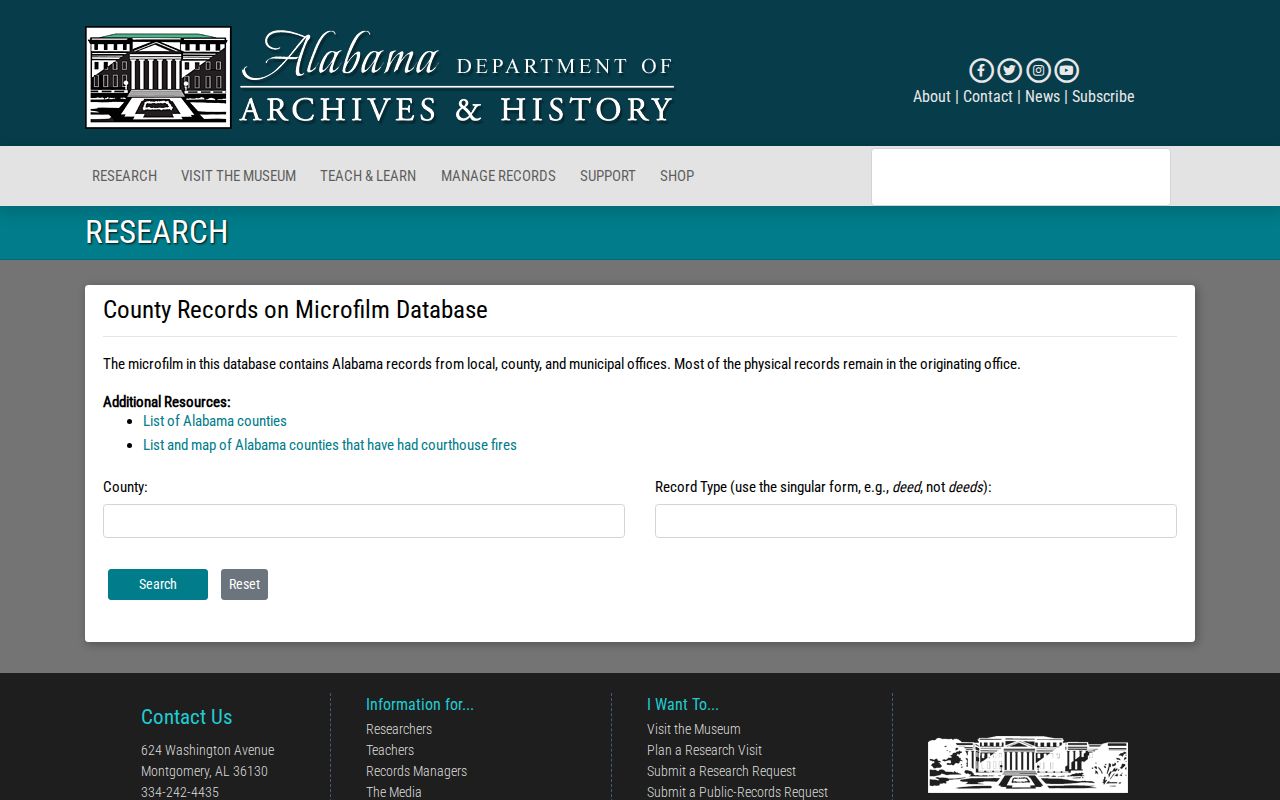
The catalog capture represents a finding aid, not a universal image database. Record the reel or book citation, then contact the archive or Lauderdale custodian for access.
FLPL Local History provides the strongest local library fallback at 350 N. Wood Avenue. Genealogy workstations allow two-hour sessions, local cardholders can use library resources, and visitors may obtain a photo-ID guest pass. The library, Probate counter, city request route, and state catalog together keep a Florence address search moving when the web trail ends.